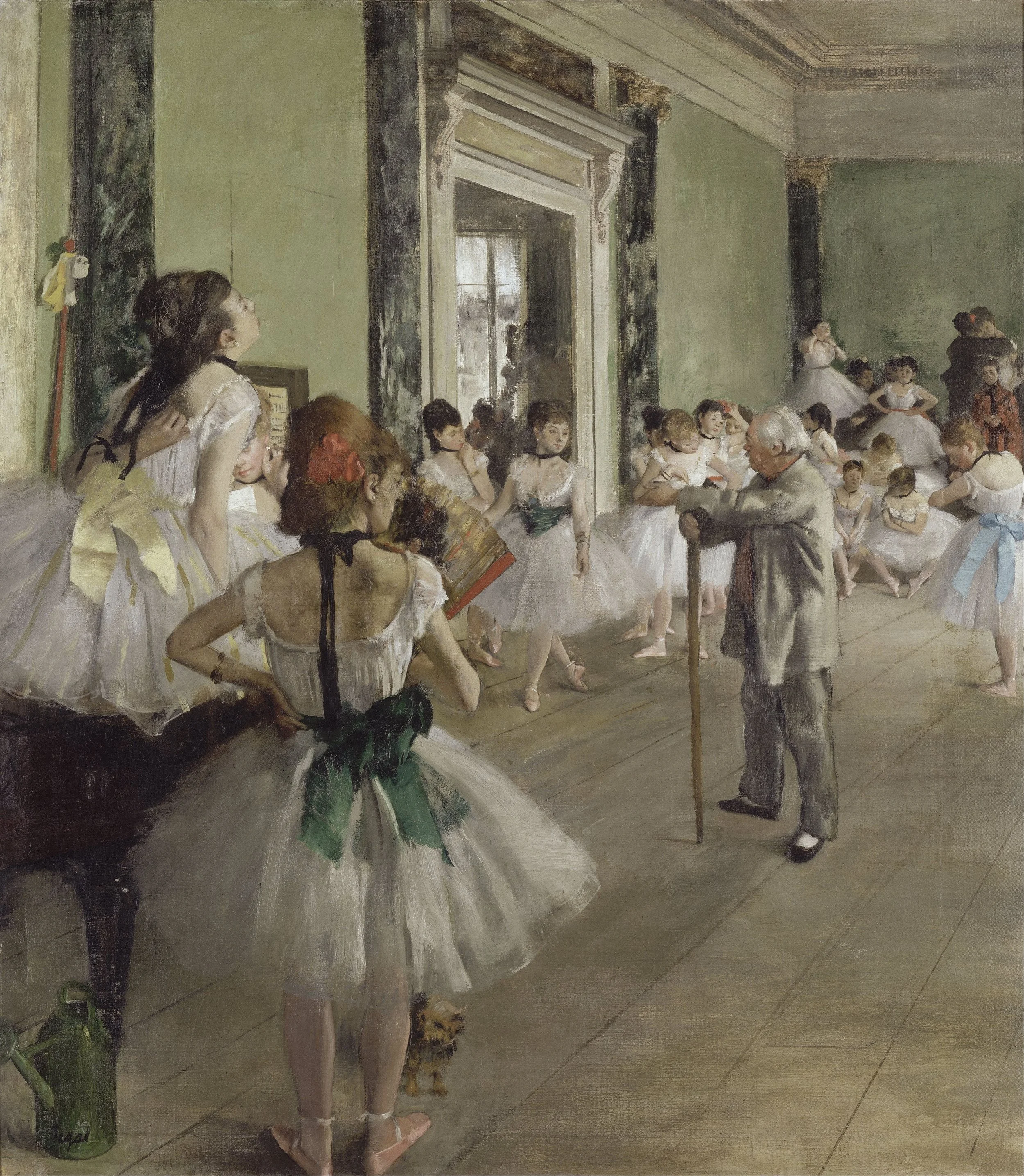
EDGAR DEGAS
The Ballet Class
um 1874
Oil on canvas
85 × 75 cm
(Abbildung: Musée d'Orsay - Google Art Project)
Edgar Degas (1834 - 1917)
Depiction of Ballet
Edgar Degas’ ballet depictions rank among the most significant works of Impressionism and are far more than mere stage scenes. He portrays dancers in moments of intense concentration, in rehearsal rooms, or in instances of exhaustion – capturing the tension between grace and discipline.
Particularly characteristic are his unusual viewpoints, cropped compositions, and diagonals, which Degas adopted from Japanese woodblock prints (Ukiyo-e). These influences enabled him to develop a new visual language, transforming ballet into a modern, dynamic form.
Degas’ ballet works had a profound impact on the depiction of movement in art and inspired numerous artists well into the modern era. For art investors, they hold considerable appeal: combining technical mastery, iconic subject matter, and international recognition. Their enduring demand, together with their art-historical significance, ensures the long-term desirability of this body of work.